
I’ve written a bit about Faith on my “Deo” page. Since this is what everything is really about, it might be good to think about it some more.
We pack a lot into the word “faith”. Commonly, we talk about being “of a faith” (e.g.: Muslim, Christian, etc.). This implies an adherence to a set of doctrines and practices that aligns oneself with a larger group. There can be a range of agreements and disagreements (e.g.: Sunni vs Shiia, Baptist vs. Roman Catholic, etc.) but still there are commonalities that allow us to speak of a larger group. The main thing with this definition is a set of assumed doctrines and practices.
Faith can also be used to describe a belief or sets of beliefs, as opposed to a set of doctrines and practices or a “knowledge base”. Whether “knowledge” is simply firmly held beliefs or something else altogether I’ll have to leave for another time. I have faith in my car that it will start and stop when I want it to, though it may not. I believe that the weather will be nice tomorrow, etc. vs: I know that 2+2=4 or that Venus is the morning star.
Then there is the idea of Faith as a gift of God’s Grace, something unique and divine that can be imparted to human beings. This seems to be a uniquely Christian idea that Faith is something implanted in us with power to achieve something in the person so implanted.
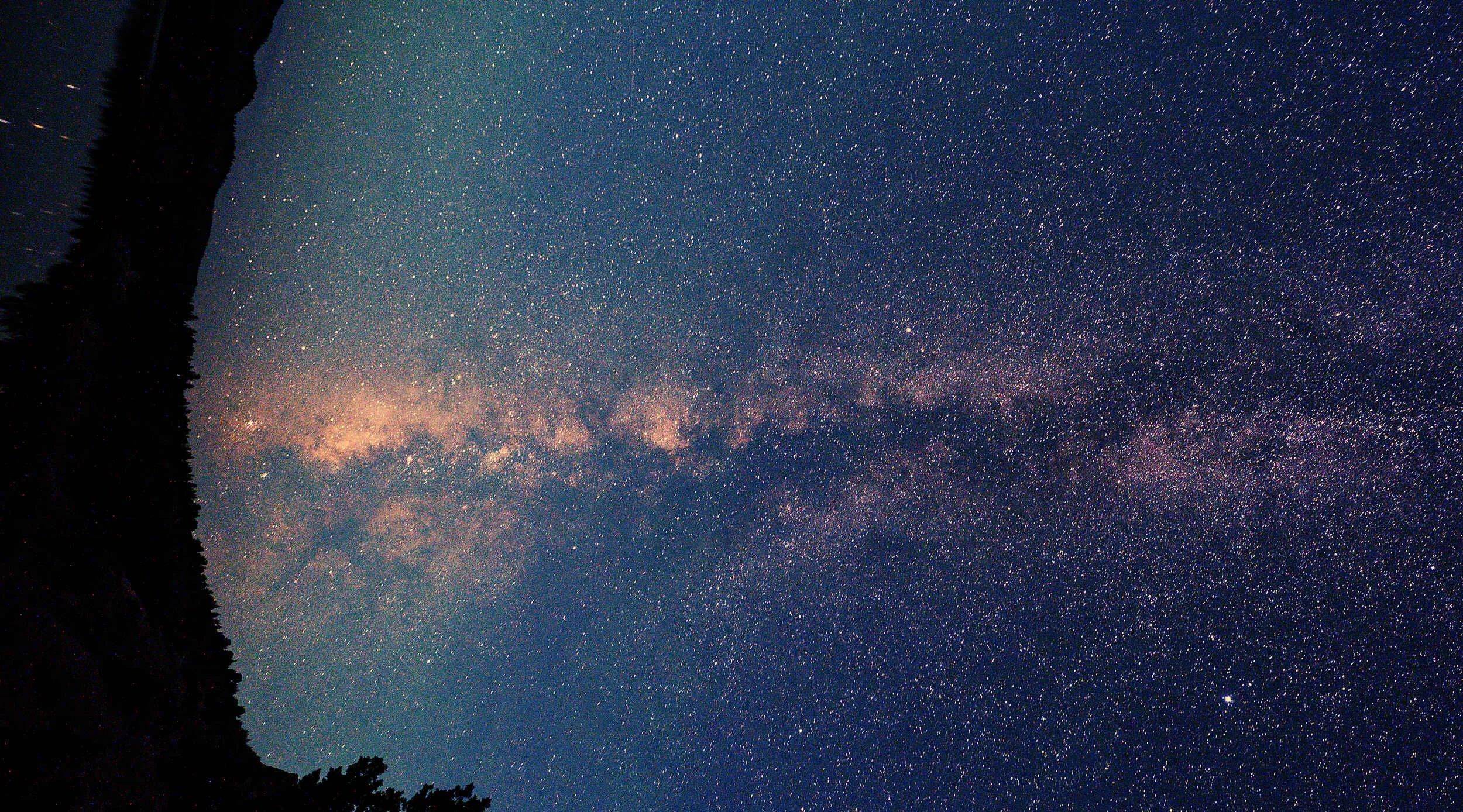
As I’ve mentioned before, I think that faith is more something we are as we act on the implanted faith and work it out in our lives. There is something marvelous here, where the flesh-and-bones biology that we are work out an additional though integral nature. The paradigmatic example is Abraham who believed God (in His promise of offspring as numerous as the stars in the heavens) and it was “counted to him as Righteousness” (Gen 15:5-6, Rom 3). This transformed Abraham from a corrupted human destined for death into an eternal image bearer destined for eternal life with God, it changed him in a fundamental way. This new reality manifested itself in the (? Supernatural) conception of Isaac though Abraham was almost 100 years old and Sarah not much younger! Also, it transformed Abraham’s mind to the point where he was willing to (counterintuitively) sacrifice Isaac (and potentially nullify God’s promise), though assured that his posterity was still to be through Isaac, i.e.: Am absolute conviction that Isaac would be resurrected from the dead (Kierkegaard 1939). All this playing out over many years, thus entailing a steadfastness to this Faith. “Now faith is the substance of things hoped for, the evidence of things not seen.” (Heb 11:1)
The ultimate manifestation/example/instantiation of this process is Jesus Christ: The perfect man who trusted God perfectly to the point of dying on a cross fully persuaded that God would not only resurrect him from the dead but that this act would save the world from sin and corruption.
So, when Jesus says “if ye have faith as a grain of mustard seed, ye shall say unto this mountain, ‘Remove hence to yonder place,’ and it shall remove. And nothing shall be impossible unto you.” (Mat 17:20), He’s not kidding. The kind of Faith that we become transforms us into image bearers who will do God-like things: “2 Very truly I tell you, whoever believes in me will do the works I have been doing, and they will do even greater things than these, because I am going to the Father. 13 And I will do whatever you ask in my name, so that the Father may be glorified in the Son. 14 You may ask me for anything in my name, and I will do it.” (John 14:12-14). Something happens to the human being who submits to the power of the Holy Spirit and lives out the Faith implanted in her. The creative power of our brains and bodies are transformed so that we will ultimately share in God’s creative power.
The implication being that something fundamentally changes in our minds/brains/bodies. So, here is an odd synergy between a feminist/atheist writer such as Simone de Beauvoir who opines that one is not born a woman but becomes one (de Beauvoir 1953), and Christian philosopher such as Dallas Willard who states that the point of our lives is who we become (Willard 1997). It is the becoming that is important, and according to Scripture, we can become children of light or children of darkness. The ups and downs of life, the joys and sorrows, good fortune and calamity, are all deliberately designed to produce such image bearers, “Faithers”.
So how does this happen? Well, we don’t know. Neuroscience has mapped out some basic functions in the brain but is nowhere close to understanding larger processes. We know that our brains are marvelous learning organs. The wiring of our neural networks is highly plastic. The networks can settle into this pattern or that depending on what impinges upon the brain, by choice or by eternal influence. We know something about how frontal lobes can inhibit certain responses (or not), how the areas of the right (as opposed to left) hemisphere. Are involved in prosidy of speech and appreciation of music. We know something about how brains decode soundwaves to understand speech and assemble word sounds and word order to express thoughts, but we know nothing (AFAIK) of how brains generate narratives and how these narratives are impacted by prior experience, memes (as defined by Dawkins 1976) and internal states. Theology has shown us how God is working out salvation history and how faith and law situates us in His economy, but we know nothing about how exactly this works through our biology.
I suspect that a large part of the problem with understanding this is the substance dualism that pervades much of our thinking on this issue, preventing the integrative understanding of the human being necessary to get a good handle on this. My mentor in med school, Gordon Globus, an existential psychoanalyst) liked to say that we are a doubly embedded being: A brain in a skull in a body. I think we need to go further: We are soul + mind + brain + body + community + world = image bearer, though not as isolated parts but a unified whole. The complexity of such a description is, of course, mind-blowing, and maybe beyond us? Who knows. But Jesus shows us! He is the perfect image-bearer, the perfect reflection of the Father. And we are to become like Him! (1 John 3:2)
We do know that and how something happens though: “Do not conform to the pattern of this world, but be transformed by the renewing of your mind. Then you will be able to test and approve what God’s will is—his good, pleasing and perfect will.” (Rom 12:2) Unfortunately, modern, materialist/positivist science seems unlikely to make room for such investigations on any serious scale. Further, the scientific method, reductionistic as it fundamentally is, is probably not well suited to do this. Nevertheless, something is happening, in millions of people across the globe and through the ages. You’d think we’d be able to nail down some of the process?
Wouldn’t it be great to bring expertise from as diverse fields as literary criticism to elementary particle physics to theology and psychology (etc) together, and tackle some of these issues. A big project, no doubt, though I think a fundamental assumption in any human rational endeavor is that God not only allows the universe to be transparent to our understanding but actually desires to and revels in revealing Himself in His creation. He wants to be known, worshiped and glorified.
Come, and see (John 1:39)