

My experience…
Car Camping for Idiots (like me)
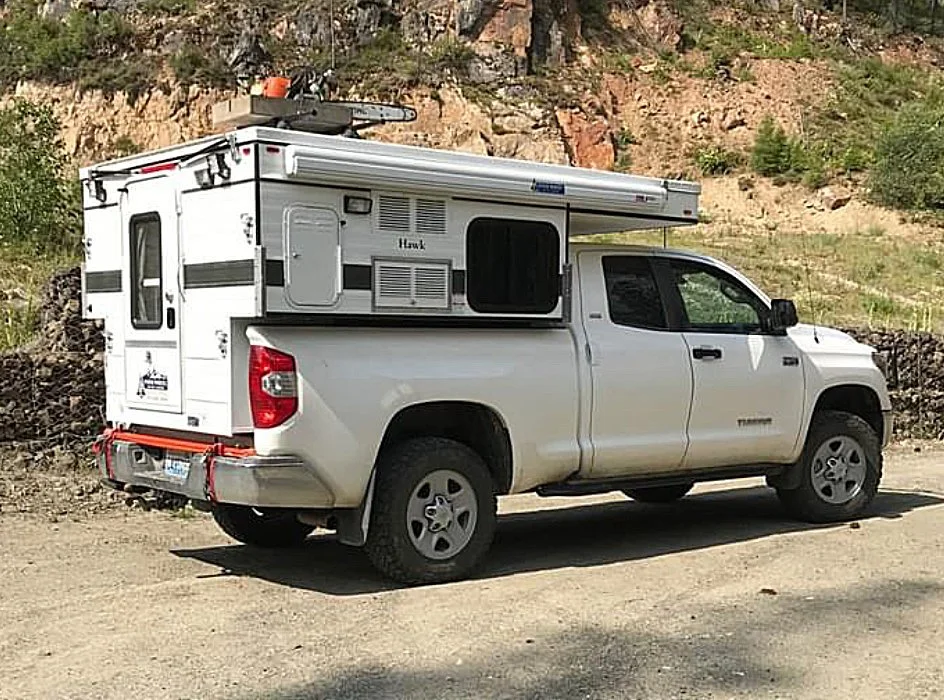
The Dream
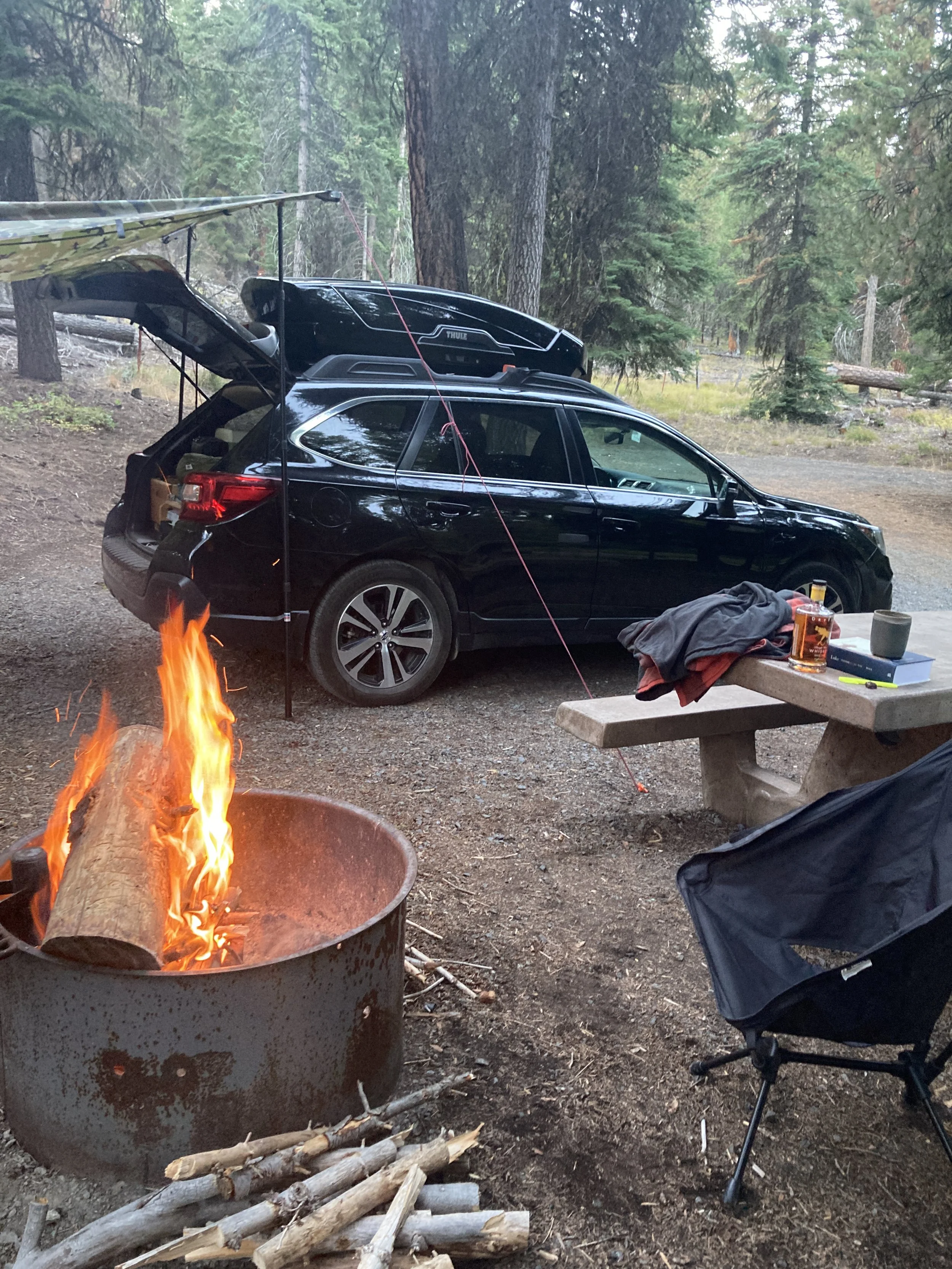
Reality. It’s what I got…
Vanlifeing, over-landing, nomading,- it’s all the rage. But who can afford these rigs? I can’t. Let’s just say it up front: The ease and convenience of a small vehicle camping outfit is awesome. You’ve RV’d your SUV and now can go anywhere, sleep anywhere (well, not quite), be free and not burdened with setting up and striking camp every day or so. It’s great. As long as the weather is perfect! Rain, wind, cold, bugs…You’ll be crying for the comforts of home before too long. But, having tried it, I’d say it’s worth it on average and will do it again next season. Here are a few thoughts:
Space. As one might expect, space is at a premium with an RV’d SUV, unless you really bring nothing with you,-which will make your adventure a drag, so you won’t do that. You’ll bring something. You gotta eat and sleep and, honestly, you’re not swaying in a hammock overlooking the Pacific Ocean in a warm evening breeze every night. And even a hammock won’t work without trees the proper distance apart. So, either you are a true minimalist and will sit only on rocks, eat nothing but trailmix and drink water from fountains you run across, you’ll bring gear. So, what to bring, where to put it and how to organize it?
A roof rack is definitely a must. Here you will put gear you will probably need but not use that often or that you will use only if in one place for more than a single night. A change of clothes, spare equipment, rough weather- or emergency gear, that kind of thing.
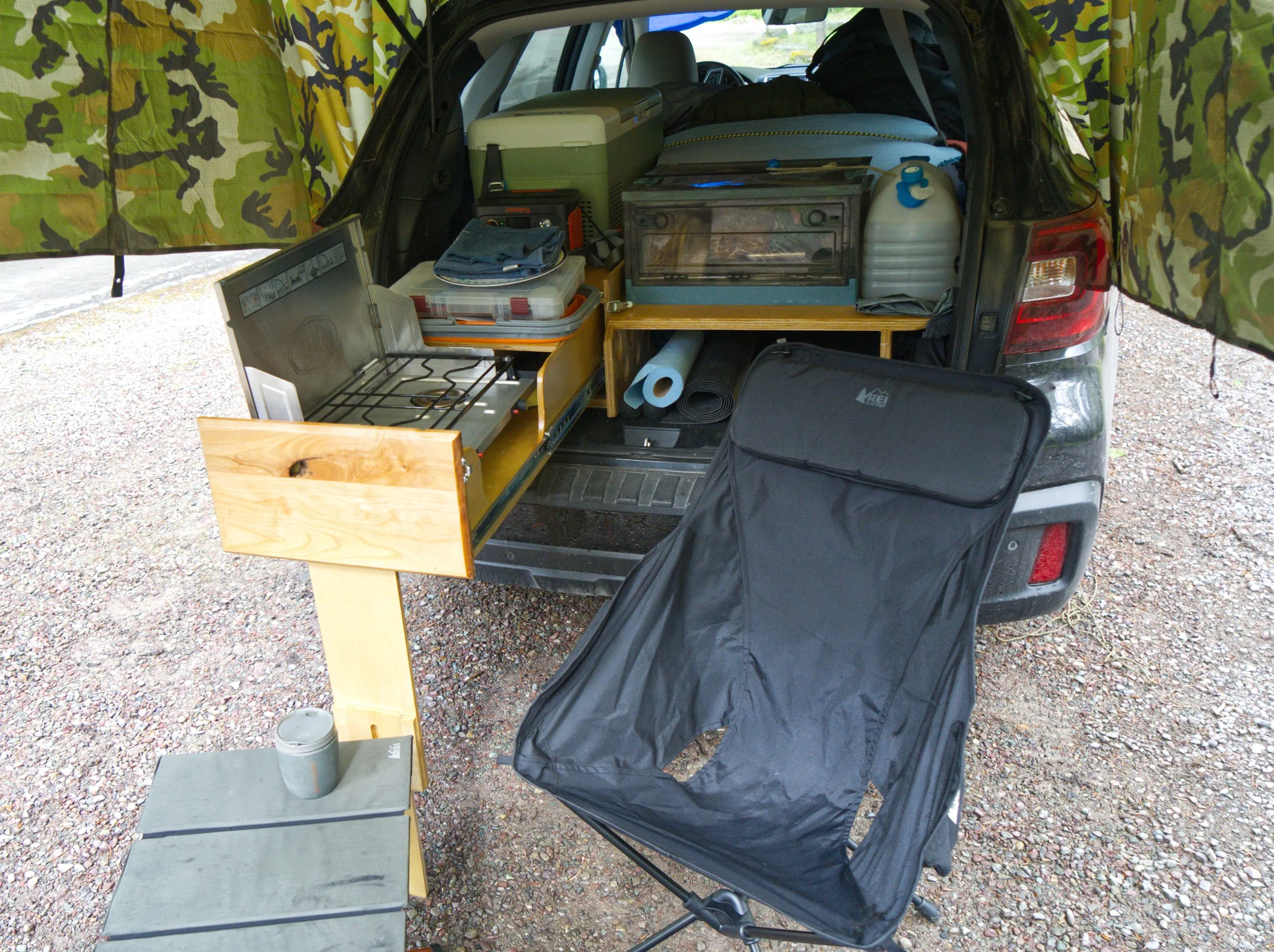
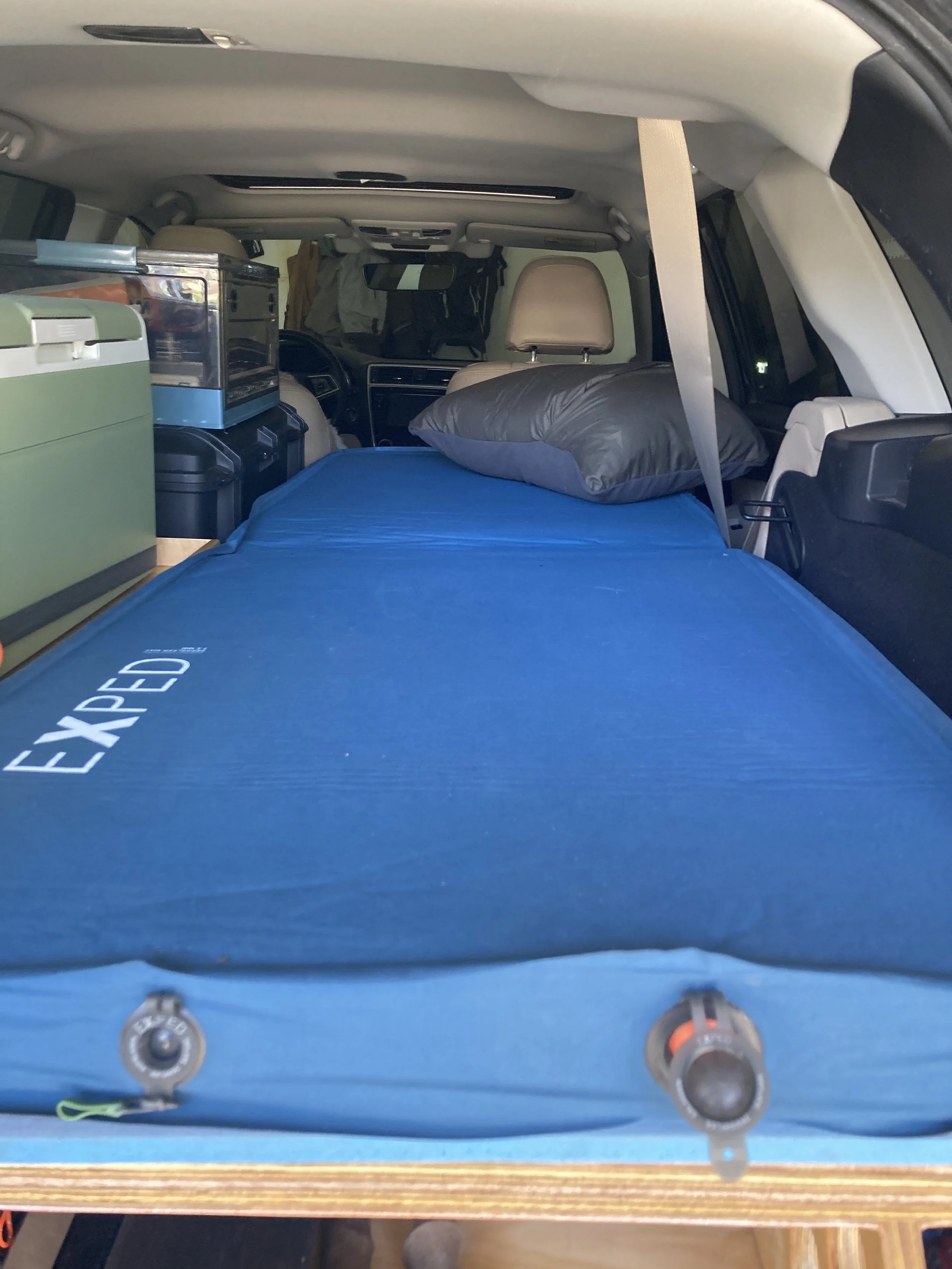
For items more often used you’ll have it closer at hand and distribute around the car depending on what you use it for. As an example: I have all my tools and emergency gear on the floor behind the driver’s seat so it’s easy to get to. I have a pull-out kitchen with all that gear and dry goods under my bed platform, a pull-out drawer for food and sundry items. Passenger’s side floor has a box with electronics, maps and such.
Water. I’m not talking that 12 oz bottle you got at the last gas station. A sealable 5gal container is a minimum. And you need to find a space for it so when it leaks (as it will) you won’t ruin a bunch of stuff (particularly electronics) but is easy to access when you’re cooking. I think a small platform on the rear passenger floor would do well. My next experiment. I used to put it in the way back next to the food box and on top of my sleeping platform, but had to fold up the bedding each day and any leakage made a mess. So, we’ll try something else next season.
Food needs to be stored properly unless you’re gonna eat in restaurants every meal, which you are not going to do. But you are going to eat. Dry food and canned goods are easy, just plan your meals ahead and keep with the cooking gear. Unless you’re on that trailmix kick your gonna want something semi-fresh, your gonna need a cooler. Ice is a hassle, so your gonna get a refrigerator. Refrigerators take space and :
Power. Unless you drive every day and can plug in multiple devices to recharge while driving, you’re gonna need a battery. “Generators” that recharge by solar cells are quite the rage but need one thing important: Sunlight. Direct, and lots of it. So, unless you are exclusively touring deserts and/or driving (a lot) every day, you’ll need a battery of some size. I got a Jackery 300, which is rated 300W (~300W/hr) which will NOT run my fridge and low wattage fan a whole night. And idling your car all day to recharge your battery will upset your fellow campers, not to mention hasten global warming Armageddon. I’d get a 1000W/Hr unit. Bigger than this and they get too bulky. Smaller and they just don’t get you through. Expect to pay $1-$1.5/W. So probably your biggest outlay. You are NOT, repeat NOT, running anything off your car battery overnight unless you plan a permanent stay wherever you are.
Ventilation. So, you are snug in your car, all wrapped up and cozy, until about 02:00 when things start to get soggy. Particularly if it’s raining outside. Your car interior is a small space and fills up with condensation quite fast. My Subaru has a sunroof, which helps a lot, but needs bug netting (and a tarp if rain) and at least one other opening to ensure cross ventilation. A low wattage fan helps circulation but needs power. So, open windows with screens (and no rain).
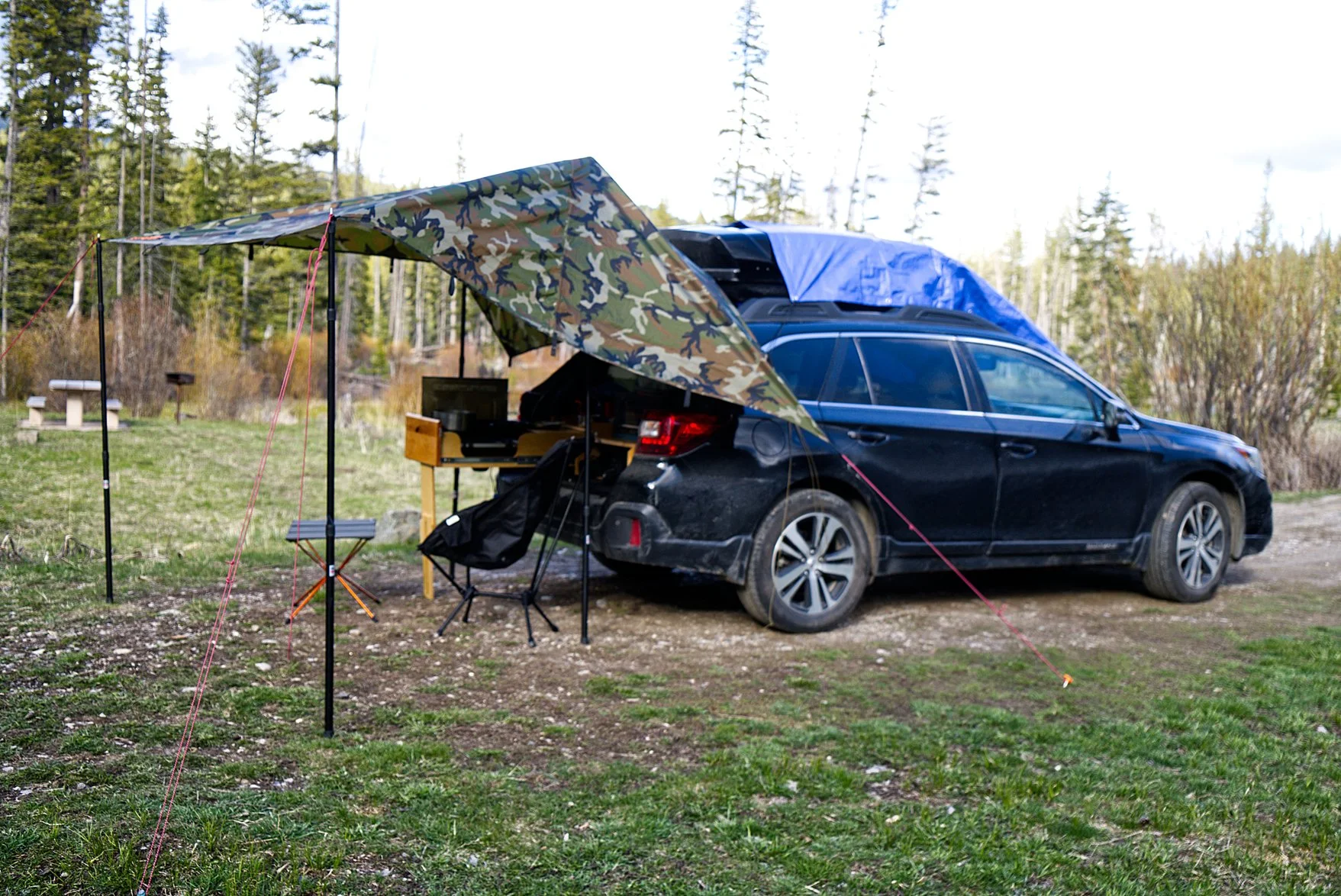
Staying dry. This is not a problem when you’re done for the day and all bedded down. The car camper serves its purpose right here. But what about those days and evenings, when rain and cold prevent you from going on those awesome hikes you were planning, or if you’re just sick of driving and want to stop for the day? Again, in perfect weather you set up your collapsing chair, kick your feet up on a rock and enjoy the Pacific sunset. Inclement weather will make this much less fun, and you are not going to be sitting in the car seat you’ve been hankering to get out of. Going to bed @ 17:00 is not an option, so what do you do? You could set up a tent, but that defeats the whole point of RV’ing your car in the first place. I’ve tried tarps and awnings off my hatchback etc, but they are not convenient and do not protect you from the wind driving rain and snow to where you are sitting. For the RV’d SUV I think this is the biggest drawback with no really good and convenient solution.
Sleeping. This requires
1) A legit and safe place to park, Campgrounds or clearly posted dispersed camping are best. Dark side-roads close to cities not so much. The farmer’s field definitely not. Rest areas can do in a pinch but are not that safe always. Ski areas in summertime are usually good.
2) Leveling. This is a must and takes practice to learn. Just a few degrees off level and you are in for a very uncomfortable night. Your smart phone probably has a leveler (with the compass or measuring app). Just make sure it’s flat on the sleeping area and not tilted on a passenger seat cushion.
Now, the whole point of all this is to get to all those awesome places you’ve been wanting to go. That means driving, long distances, at speed. That entails motion. Motion x mass = momentum. So unless you never intend to stop (or simply apply angular momentum ie: turning), which of course you do, you want to avoid all your great stuff flying through the windscreen (or hitting you in the back of the head). Further more, most people will invest in a sleeping platform, usually out of ¾” plywood since most rear compartments with passenger seats folded down are not flat. This gets HEAVY, and any slack in the fit and the compartment can tear up the interior of your car in a hurry. I engineered mine to fit snugly around the wheel wells to lock it in place and also applied carpet strips to the edges. I honeycombed as much as I could to minimize weight while still maintaining structural integrity. Anything placed on top of the platform (battery, fridge, food box, water bottle) are snugly tethered down with draw straps. If you don’t, that odd sound you heard in the hairpin turns going down the Beartooth pass is gonna cost ya.
So, you’re still foolish enough to go to the trouble and expense of RV’ing your SUV (my set up ran me ~$1500 all told). You’re either waking up in that enchanted forest or cruising along, free as a bird, overlanding with the best of them. Adventure! Then the battery dies OR there’s a flat (remember what I said about NEVER running anything off your car battery? You didn’t listen, did you!). So, you pop the hood for a jump, or look at the flat to use the spare and realize that jumper cables or spare tire are in the wheel-well UNDERNEATH all your carefully rigged up gear! Worse, if your car is modern and everything operates electronically, a dead battery can mean you can’t even get in your car. But let’s say you’re in it and that’s not a problem. But you are in the middle of nowhere! (Can anyone spell GARMIN?) Two items will save the day: Small battery powered jump starters and tire inflators. The two together will be about the size of a 6-pack and run you about $150 each. Just be sure they are charged before you go and after each use and that you NEVER run anything else off them (unless you need an SOS from your dead cell phone). You’ll need basic tools for repairs, a quart of oil and maybe some coolant though water will suffice in a pinch. And Duct tape. NEVER leave home without it.
Pretty open and exposed. Handles rain OK, wind not so much. Gets chilly. Bring a blanket.
The Setup
Sleeps one